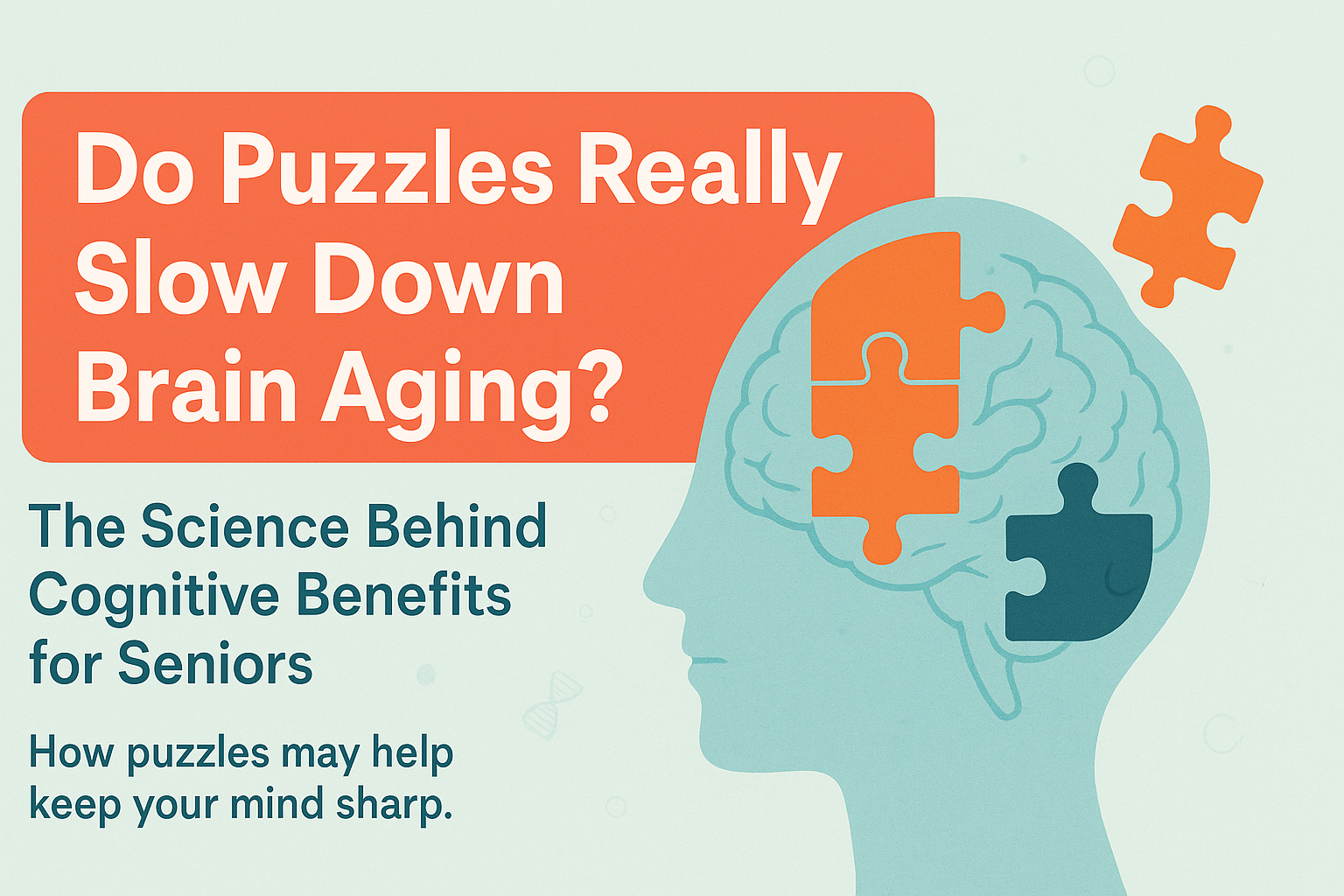
Do Puzzles Help Your Brain? The Science Behind Cognitive Benefits for Seniors
As people age, it is normal to wonder how to keep the mind sharp, maintain memory, and stay mentally engaged. Many seniors—and the adult children who support them—turn to puzzles like Sudoku,word searches, and crosswords as a fun, low-stress way to stay mentally active.
But do puzzles actually help slow cognitive decline or brain aging? According to decades of research, the answer is encouraging: mentally stimulating activities can support brain health, although they are not a cure or guaranteed preventative for dementia.
This article explores what the science currently shows—without exaggeration or unverified claims—so you can make informed decisions about using puzzles as part of healthy aging.
How Brain Aging Works
As we age, certain cognitive functions tend to decline naturally, including:
- Processing speed
- Working memory
- Executive function
- Attention
These changes are considered a part of normal aging and are different from conditions such as mild cognitive impairment (MCI) or dementia. Researchers have long studied whether mentally stimulating activities—such as reading, puzzles, games, or learning new skills—can help maintain cognitive skills longer.
What the Research Says About Puzzles and Brain Health
Mentally stimulating activities are linked to slower cognitive decline
One of the most widely cited long-term studies is the Mayo Clinic Study of Aging, which examined whether older adults who engaged in activities such as reading, playing games, crafting, and doing puzzles had different cognitive outcomes compared with those who did not.
Researchers found that adults aged 70 and older who regularly engaged in mentally challenging activities had a statistically significant association with a lower risk of developing mild cognitive impairment compared with those who did not engage in those activities regularly (Roberts et al., 2012, Mayo Clinic Proceedings).
While this type of study cannot prove cause and effect, it strongly suggests that staying mentally active is related to better cognitive health in later life.
Mental stimulation may help strengthen cognitive reserve
The concept of cognitive reserve refers to the brain’s resilience to age-related changes and damage. People with higher cognitive reserve seem to cope better with the physical changes of aging and may show symptoms of cognitive decline later than others with similar brain changes.
Research has shown that engaging in cognitively stimulating activities throughout life, including in late adulthood, is associated with:
- Better performance on memory and thinking tests
- Delayed onset of cognitive impairment in observational studies
- Greater ability to compensate for age-related brain changes
For example, a study in the journal Neurology found that late-life cognitive activity (such as reading or playing games) was associated with slower rates of cognitive decline, even after accounting for education and early-life activity (Wilson et al., 2013).
Puzzles are one of many activities that can contribute to overall cognitive engagement.
Word and number puzzles correlate with sharper cognition
A large observational study of adults aged 50 and older examined how frequently they used word and number puzzles and how they performed on various cognitive tests. Those who reported using puzzles more often tended to perform better on measures of reasoning, attention, and memory compared with those who used them less frequently (Eeles et al., 2019, International Journal of Geriatric Psychiatry).
This kind of research does not prove that puzzles directly cause better cognition, but it does show a strong association between regular puzzle use and sharper performance on cognitive tasks.
Puzzles do not cure or prevent dementia
It is important to be clear: based on current evidence, puzzles do not cure, prevent, or reverse dementia. Organizations such as the National Institute on Aging and the Alzheimer’s Association emphasize that while mentally stimulating activities may help support brain health and build cognitive reserve, they are not a medical treatment.
However, participating in mental, physical, and social activities is often recommended as part of a brain-healthy lifestyle and may help delay the appearance of symptoms or support better day-to-day functioning in older adults.
Why Puzzles Are Especially Helpful for Seniors
Even though puzzles are not a cure for cognitive disorders, they offer several practical benefits that are supported by research and experience in everyday life.
Improved attention and concentration
Puzzles such as Sudoku and word searches require sustained attention, logical reasoning, and careful scanning for patterns or specific letters and numbers. These tasks exercise attention and concentration, abilities that can remain adaptable in older adulthood.
Support for working memory
Keeping track of which numbers, letters, or possibilities have already been tried exercises working memory. Regularly engaging that system through puzzles may help maintain its function as part of a broader set of cognitively stimulating activities.
Stress reduction and emotional well-being
Many people find puzzles relaxing and calming. Focusing on a single, enjoyable task can provide a break from worries and everyday stress. While this is not a clinical treatment for anxiety or depression, puzzles can contribute to a sense of enjoyment, accomplishment, and routine, all of which are important for emotional well-being in older adults.
Accessibility and comfort for seniors
Large-print puzzle books can be particularly helpful because they reduce eye strain and make it easier for people with vision or dexterity challenges to continue enjoying puzzles. Clear layouts, one puzzle per page, and high-contrast design can help seniors stay engaged without frustration or discomfort.
How Often Should Seniors Do Puzzles?
Studies of cognitive aging often look at how frequently people engage in mentally stimulating activities. While specific recommendations vary, many observational studies report benefits in people who engage in such activities:
- Several times per week, or
- Daily for short periods of time
A common pattern in research is that adults who spend time on cognitive activities most days of the week tend to show better cognitive outcomes than those who rarely or never do them. For many people, 15–30 minutes a day of puzzles, reading, or similar activities is a realistic and sustainable goal, though the optimal amount may vary from person to person.
It is important to remember that these findings are correlational: they suggest an association, not definitive proof that puzzles alone cause slower decline. Still, they provide a reasonable basis for including puzzles as part of a healthy lifestyle for aging.
What Types of Puzzles Are Best for Brain Health?
The best cognitive benefits appear to come from activities that are:
- Challenging but not overwhelmingly difficult
- Varied or novel enough to stay interesting
- Enjoyable, so they can be done consistently
- Appropriate for the individual’s abilities and preferences
Common puzzle types that support different aspects of thinking include:
Sudoku (number puzzles)
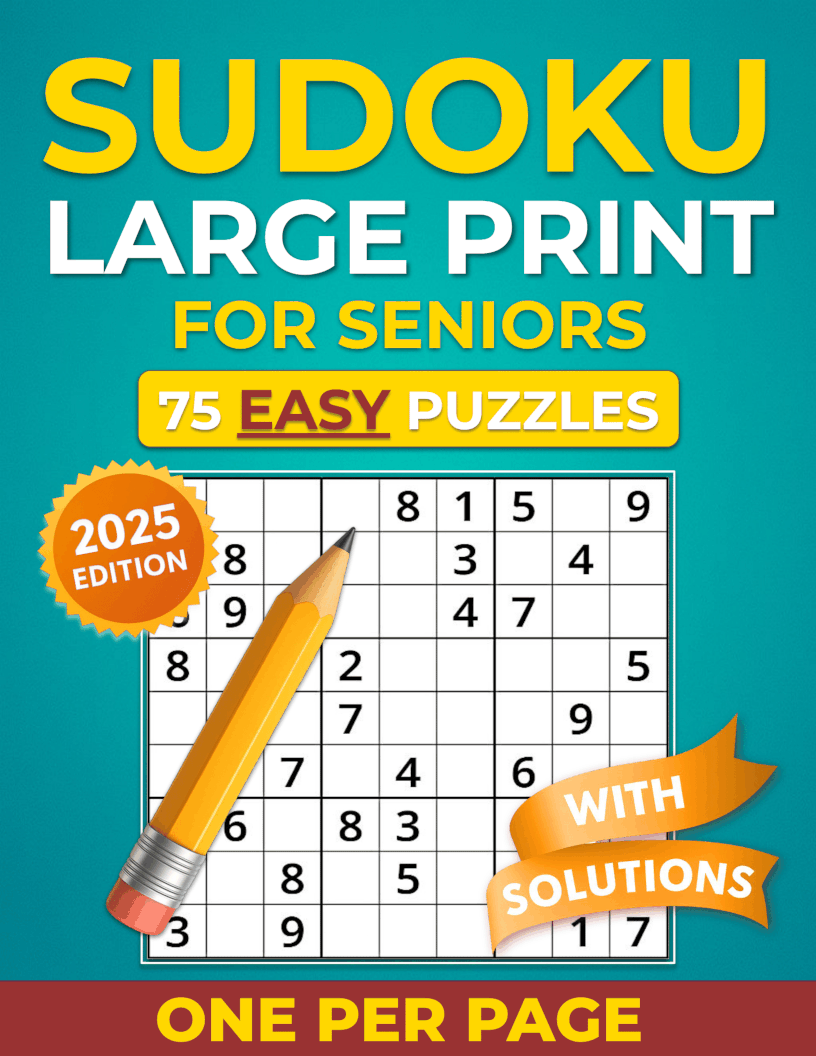
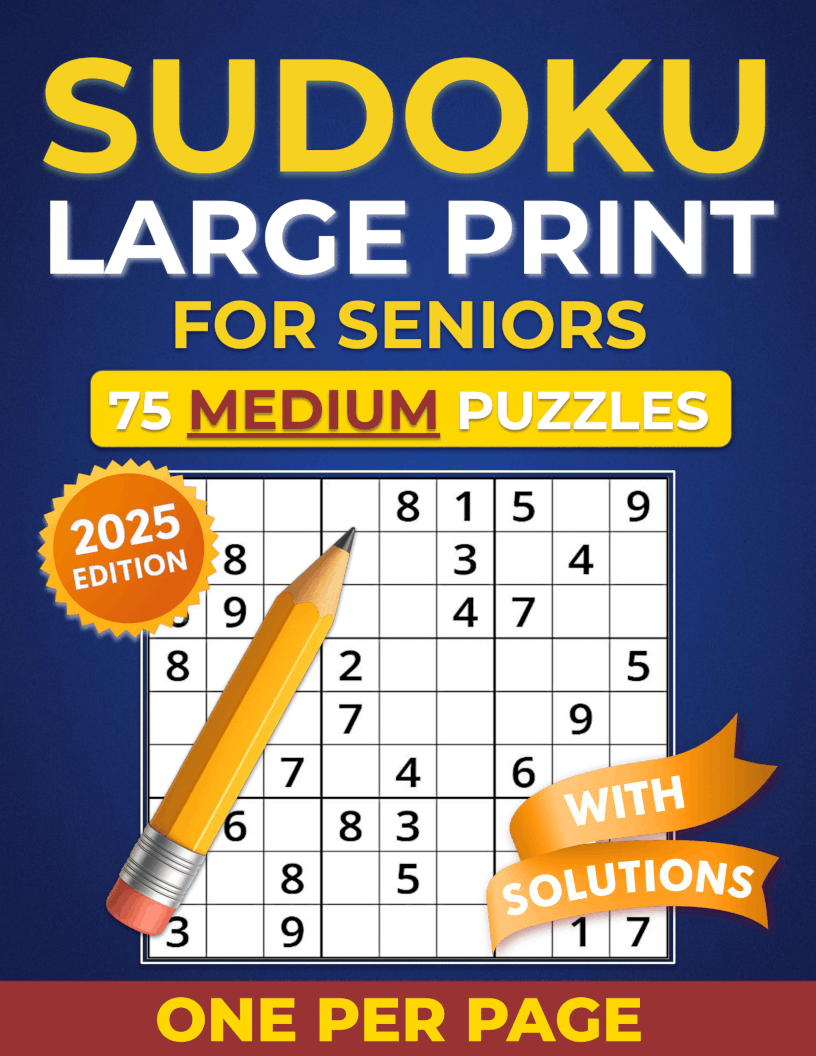
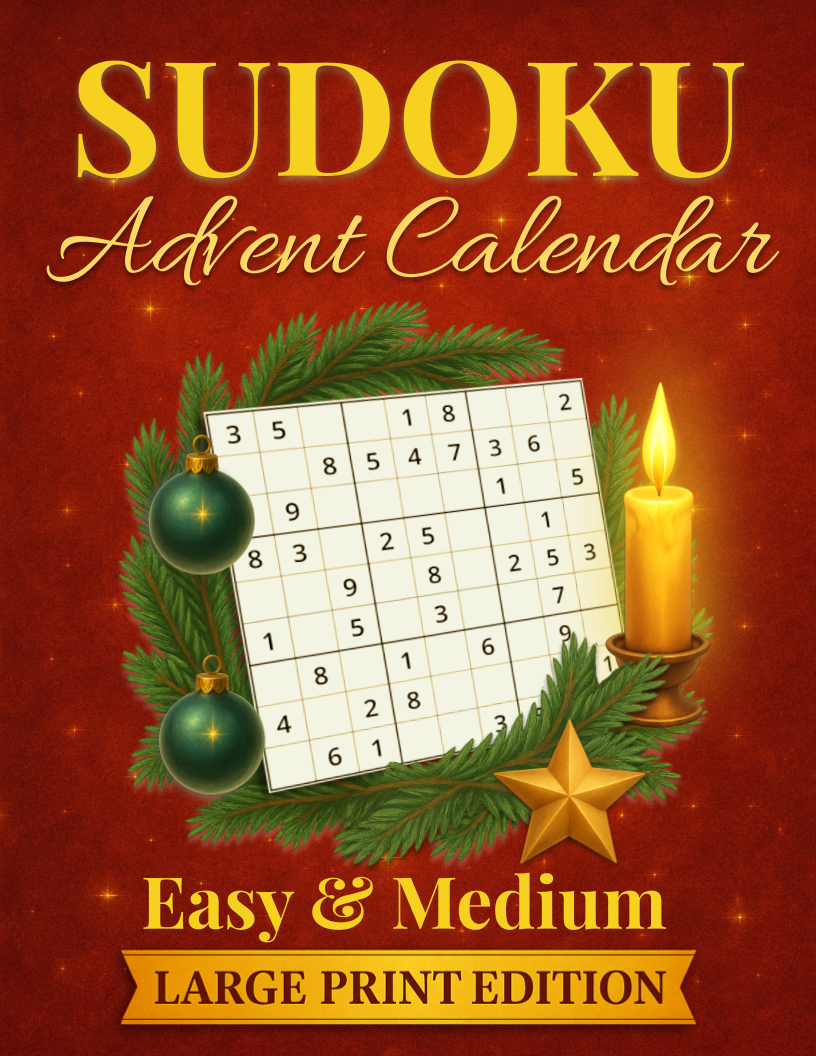
Sudoku engages logical reasoning, pattern recognition, and working memory. Players must consider multiple possibilities, hold them in mind, and eliminate options systematically.
Word searches
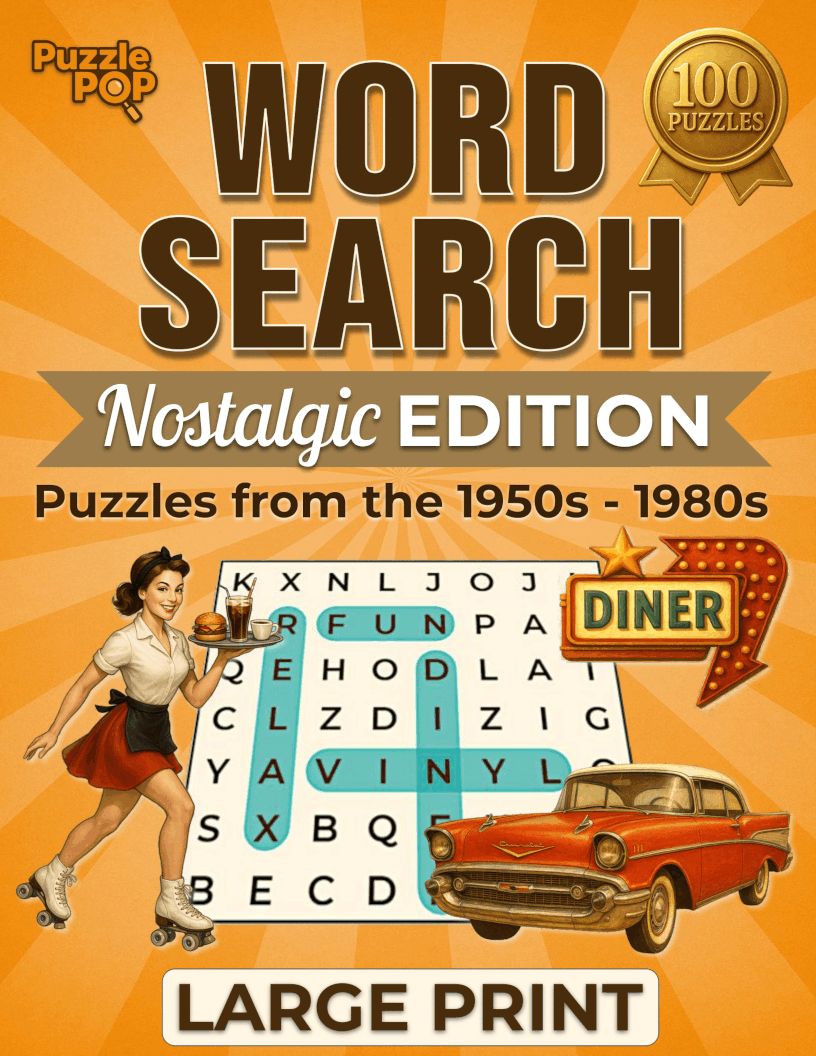
Word searches promote visual scanning, attention to detail, and sustained concentration. They can also reinforce recognition of familiar words and themes.
Crossword puzzles
Crosswords are often linked with verbal ability, vocabulary, and long-term memory retrieval. They can be particularly engaging for people who enjoy language and trivia.
Jigsaw and visual puzzles
Jigsaw puzzles and similar visual challenges support visuospatial skills, planning, and problem-solving as players decide where pieces fit and how the overall picture comes together.
Ultimately, the most effective puzzle is the one a person enjoys enough to return to regularly. Consistency matters more than choosing a single “best” type.
Conclusion: Do Puzzles Slow Brain Aging?
Based on current research, puzzles and other mentally stimulating activities are associated with:
- Slower cognitive decline in observational studies
- Better performance on tests of memory, reasoning, and attention
- Greater cognitive reserve that may help the brain cope with aging
At the same time, puzzles do not cure, prevent, or reverse dementia. They are best understood as part of a broader, brain-healthy lifestyle that also includes physical activity, social engagement, good sleep, and balanced nutrition.
For many seniors, puzzles are a safe, enjoyable way to stay mentally active, reduce stress, and create moments of satisfaction and accomplishment. When combined with other healthy habits, they can play a meaningful role in supporting cognitive health and quality of life as we age.
Frequently Asked Questions
Do puzzles help your brain as you age?
Yes. Research shows that mentally stimulating activities like puzzles are associated with slower cognitive decline, better performance on memory and reasoning tests, and greater cognitive reserve. However, puzzles are not a cure or guaranteed preventative for dementia.
Can puzzles prevent or cure dementia?
No. Based on current evidence, puzzles do not cure, prevent, or reverse dementia. However, organizations like the National Institute on Aging recommend mentally stimulating activities as part of a brain-healthy lifestyle that may help delay symptoms or support better day-to-day functioning.
How often should seniors do puzzles for brain health?
Research suggests that engaging in cognitive activities several times per week, or daily for short periods, is beneficial. Many studies find that 15–30 minutes a day of puzzles, reading, or similar activities is a realistic and sustainable goal associated with better cognitive outcomes.
What types of puzzles are best for brain health?
Sudoku engages logical reasoning and working memory. Word searches promote visual scanning and sustained concentration. Crosswords support vocabulary and long-term memory retrieval. Jigsaw puzzles build visuospatial skills. The most effective puzzle is one you enjoy enough to do regularly—consistency matters more than choosing a single type.
Why are large-print puzzle books good for seniors?
Large-print puzzle books reduce eye strain and make it easier for people with vision or dexterity challenges to enjoy puzzles. Clear layouts, one puzzle per page, and high-contrast designs help seniors stay engaged without frustration or discomfort.
References
- Roberts, Rosebud. O., et al. (2012). Activities of daily living, cognitive activity, and risk of mild cognitive impairment.Mayo Clinic Proceedings. Available at: https://jamanetwork.com/.
- University of Exeter. "Regular crosswords and number puzzles linked to sharper brain in later life." ScienceDaily. ScienceDaily, 16 May 2019. Available at: https://www.sciencedaily.com/.
- Wilson, R. S., et al. (2013). Cognitive activity and cognitive decline in old age.Neurology, 81(4), 314–321.
- Eeles, E. M. P., et al. (2019). The relationship between word and number puzzle use and cognitive function in adults aged 50 and over.International Journal of Geriatric Psychiatry.
- Stern, Y. (2012). Cognitive reserve in ageing and Alzheimer’s disease.The Lancet Neurology, 11(11), 1006–1012. Available at: https://pubmed.ncbi.nlm.nih.gov/
- National Institute on Aging. Cognitive Health and Older Adults. Available at: https://www.nia.nih.gov
- Alzheimer’s Association. Lifestyle changes help reduce risk of cognitive decline. Available at: https://www.alz.org/
- Mayo Clinic. Healthy Brain Aging and Cognitive Health. Available at: https://www.mayoclinic.org